


Free · 60 seconds · 9 questions
Is your desk job switching your body off?
Answer 9 quick questions to get your Desk Damage Score — and see exactly what all that sitting is doing to you.
…
One last thing
Your score is ready
What's your first name? We'll personalize your analysis with it.
Your result
Your desk damage score
Want the detailed breakdown + your personal Desk Reset Blueprint?
We'll send your full analysis to your inbox — along with your 5-minute Reset Blueprint, built around your answers. Yours to keep.
✓ ✓ Sent! Check your inbox in a minute — and peek in Spam/Promotions if it's hiding (drag it to your inbox so the next ones land right). Your analysis continues below.
Your personal analysis
What your score actually means
…
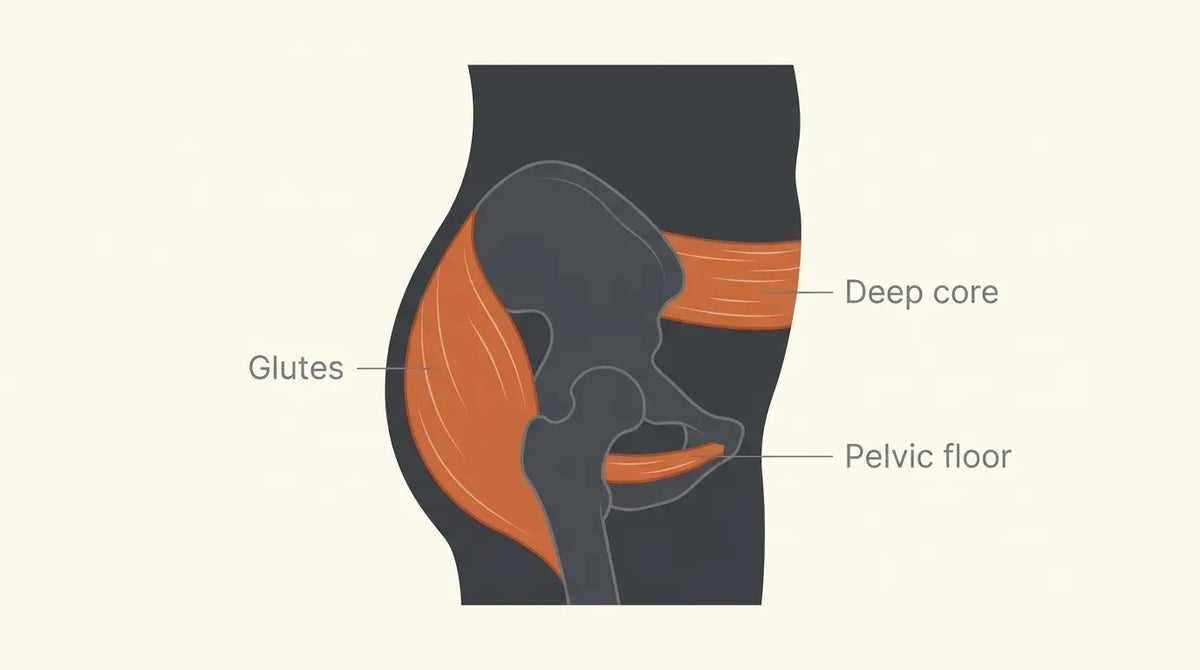
Your glutes learn to stay off
Your glutes are the largest muscle group in your body — and when you sit, they do exactly nothing. Hour after hour, day after day, your nervous system learns a simple lesson: these muscles aren't needed. The muscles don't disappear — they stop firing when you need them.
This pattern is common enough that spine researchers gave it a name — "gluteal amnesia" — and surveys put the average American office worker at 9+ hours of sitting a day. It's not a you-problem. It's a chair-problem that compounds quietly for years.
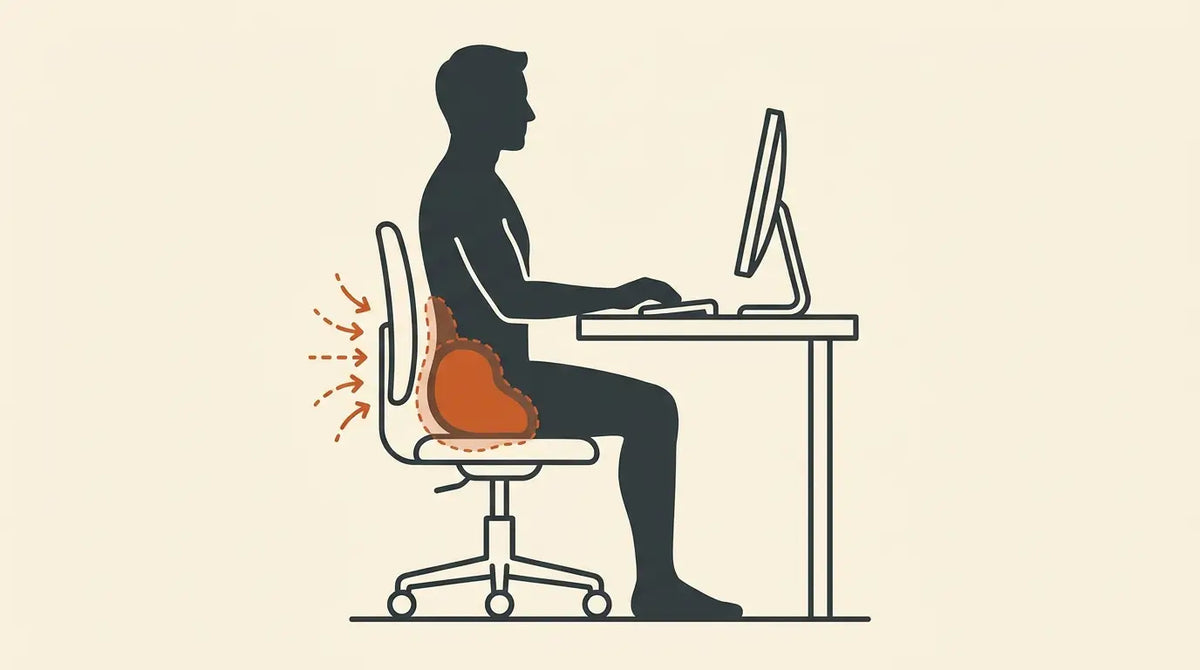
The load has to go somewhere
…
…
Stretching treats the symptom. Not the switch.
…
Stretching feels good for an hour — but it doesn't teach a switched-off muscle to fire again. The gym works, but a 90-minute session your calendar never allows isn't a plan. Walking helps your heart, yet barely activates the glute and deep core chain at all.
What actually flips the switch is targeted resistance — a movement that forces exactly that chain to contract, hard enough to matter, a few minutes a day. That's not opinion; it's the same principle physical therapists use to re-activate under-used muscles after injury: isolate the chain, load it progressively, repeat daily in short doses.
The inward squeeze
Squeezing inward against resistance — knees or thighs — recruits the inner thighs, glutes, deep core and pelvic floor in one motion. It's the one pattern that hits the entire switched-off chain at once, and you can do it sitting on your couch. 3 seconds on, slow release, repeat. Ten minutes a day.
You could start tonight — with a pillow
Honestly: squeeze a firm pillow between your knees for 3 seconds, release slowly, repeat 15 times. That's the movement. Try it tonight — you'll feel exactly which muscles wake up.
You'll also feel the problem: a pillow gives you maybe 2 lbs of resistance, and it never gets harder. Muscles re-activate under progressive load — enough resistance to matter, increasing as you get stronger. Whatever tool you use, three things decide whether this works:
1. Real resistance — 20 lbs minimum, or the chain isn't challenged. 2. Adjustability — what wakes the muscles in week 1 does nothing by week 4. 3. Zero friction — if it needs setup, a mat, or a gym, you'll skip it by Thursday. The best tool is the one sitting within arm's reach of your couch.

Coreform Activator™
This is the tool we built against those three criteria: 20–55 lb adjustable resistance around the exact inward squeeze your analysis points to — silent, zero setup, lives next to your couch. Ten minutes a day while you watch TV.
See what we recommend for your score →Not convinced yet? Read the recovery stories →